Digital assets have transformed the way people think about ownership and wealth.
Cryptocurrencies such as Bitcoin, Ethereum, and other digital assets have introduced new opportunities for investors, but they have also highlighted the importance of understanding volatility and diversification.
For investors who have accumulated significant digital wealth, the question is no longer only how to grow that wealth. It is also how to diversify it across different types of assets.
One potential approach is to allocate a portion of wealth toward tangible assets such as investment-grade fancy colored diamonds.
Digital Assets and Physical Assets Are Different
Digital and tangible assets operate in fundamentally different environments.
Digital assets exist within technological and financial networks, while physical assets such as diamonds derive value from their material characteristics, scarcity, craftsmanship, certification, and global demand.
Because their value drivers are different, combining different asset categories can provide a broader approach to portfolio construction.
Why Diversification Matters
Diversification is one of the fundamental principles of investment management.
The objective is not necessarily to eliminate risk. Rather, diversification can help investors avoid depending entirely on the performance of one asset, market, or economic environment.
For someone whose wealth is heavily concentrated in digital assets, adding exposure to a physical asset class may provide another dimension of diversification.
The Appeal of Rare Colored Diamonds
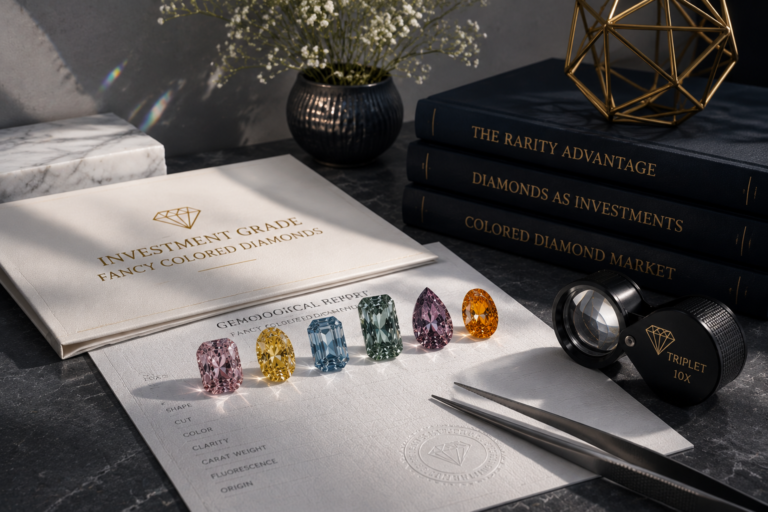
Investment-grade fancy colored diamonds have several characteristics that distinguish them from many financial assets.
They are:
- Physical and tangible
- Highly portable
- Naturally scarce
- Globally recognized
- Available in limited quantities at exceptional quality levels
- Capable of being independently graded and certified
These characteristics make them an interesting alternative asset for investors who want to diversify part of their wealth into physical assets.
Converting Digital Wealth Into Physical Wealth
The concept is relatively straightforward.
An investor can allocate a portion of their portfolio toward a physical asset while maintaining exposure to their existing investments.
This does not mean abandoning digital assets or traditional financial markets. Instead, it introduces another asset category into the overall wealth strategy.
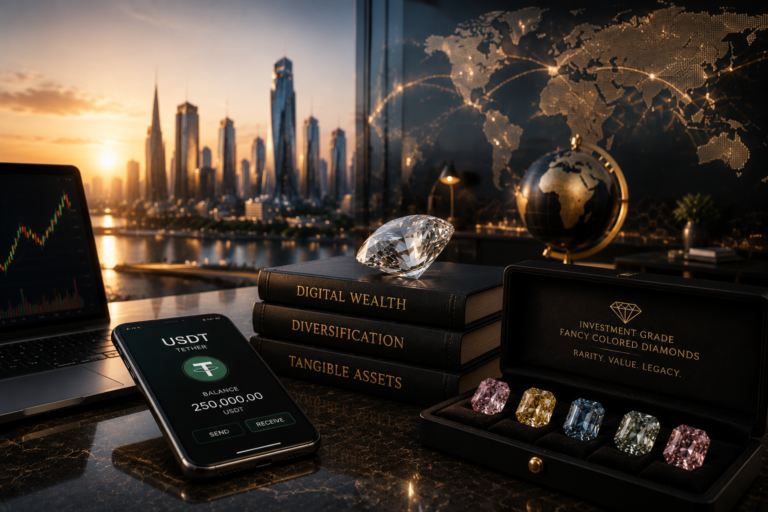
At Novel Asset Management, investors can also use USDT to purchase investment-grade fancy colored diamonds, creating a direct bridge between digital wealth and tangible assets.
Security Becomes Especially Important
Physical wealth requires a different type of protection.
Secure storage, transportation, documentation, and insurance become important considerations when owning a high-value diamond.
A professional infrastructure can help investors manage these practical aspects of physical asset ownership.
Understanding Liquidity
One important difference between digital assets and rare physical assets is liquidity.
Digital markets can operate continuously, while selling a rare physical asset may require identifying an appropriate buyer, market, dealer, or auction channel.
For this reason, investors should consider their investment horizon and potential exit strategy before purchasing a tangible asset.
A Balanced Approach to Modern Wealth
The future of wealth management may not be about choosing between digital and physical assets.
Instead, sophisticated investors can consider how different asset classes complement one another.
Digital assets can provide one form of exposure. Traditional financial assets can provide another. Tangible assets such as rare colored diamonds can add a physical component to the overall portfolio.
The key is understanding the characteristics, risks, liquidity, and suitability of each asset before making an investment decision.
For investors exploring alternatives to a portfolio concentrated in digital assets, investment-grade fancy colored diamonds offer an opportunity to consider a rare and tangible form of wealth diversification.